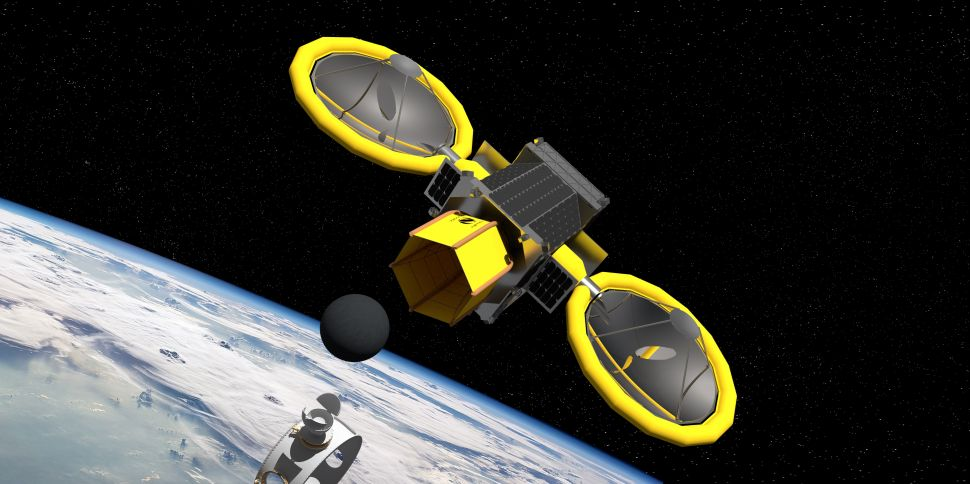
Optical Mining is a revolutionary technology that eliminates the need for heavy drills and excavators. By concentrating sunlight, we can fracture rocks and extract water using pure thermal energy.
Traditional mining grinds rock. Optical mining explodes it microscopically. Here is the step-by-step mechanism.
Massive, lightweight inflatable mirrors capture sunlight and focus it into a tight beam, intensifying the heat by thousands of times.
The beam hits the asteroid surface. The extreme temperature difference causes the rock to fracture and flake off (thermal spalling) without touching it.
The asteroid is contained in a sealed bag. As the rock fractures, water ice sublimates into steam, which is trapped by the bag.
The trapped steam is pumped into "Cold Traps" (cryogenic tanks) where it freezes back into pure ice, ready to be used as rocket fuel.
On Earth, excavators use gravity to push down into the dirt. In Zero-G, if a drill pushes against a rock, the spaceship gets pushed backwards.
Optical mining has Zero Reaction Force. Because we are only throwing light (photons) at the rock, the spacecraft doesn't need massive thrusters to hold itself in place. It melts the asteroid from a distance.
| Feature | Mechanical Mining (Drills) | Optical Mining (Lasers/Sun) |
|---|---|---|
| Moving Parts | High (Gears, bits, hydraulics break easily) | Low (Only mirrors move) |
| Dust Control | Difficult (Debris floats everywhere) | contained (Sealed inside a bag) |
| Power Source | Requires heavy electricity/batteries | Uses direct solar thermal energy |
| Rock Hardness | Bits break on hard rocks | Works better on hard/volatile rocks |